
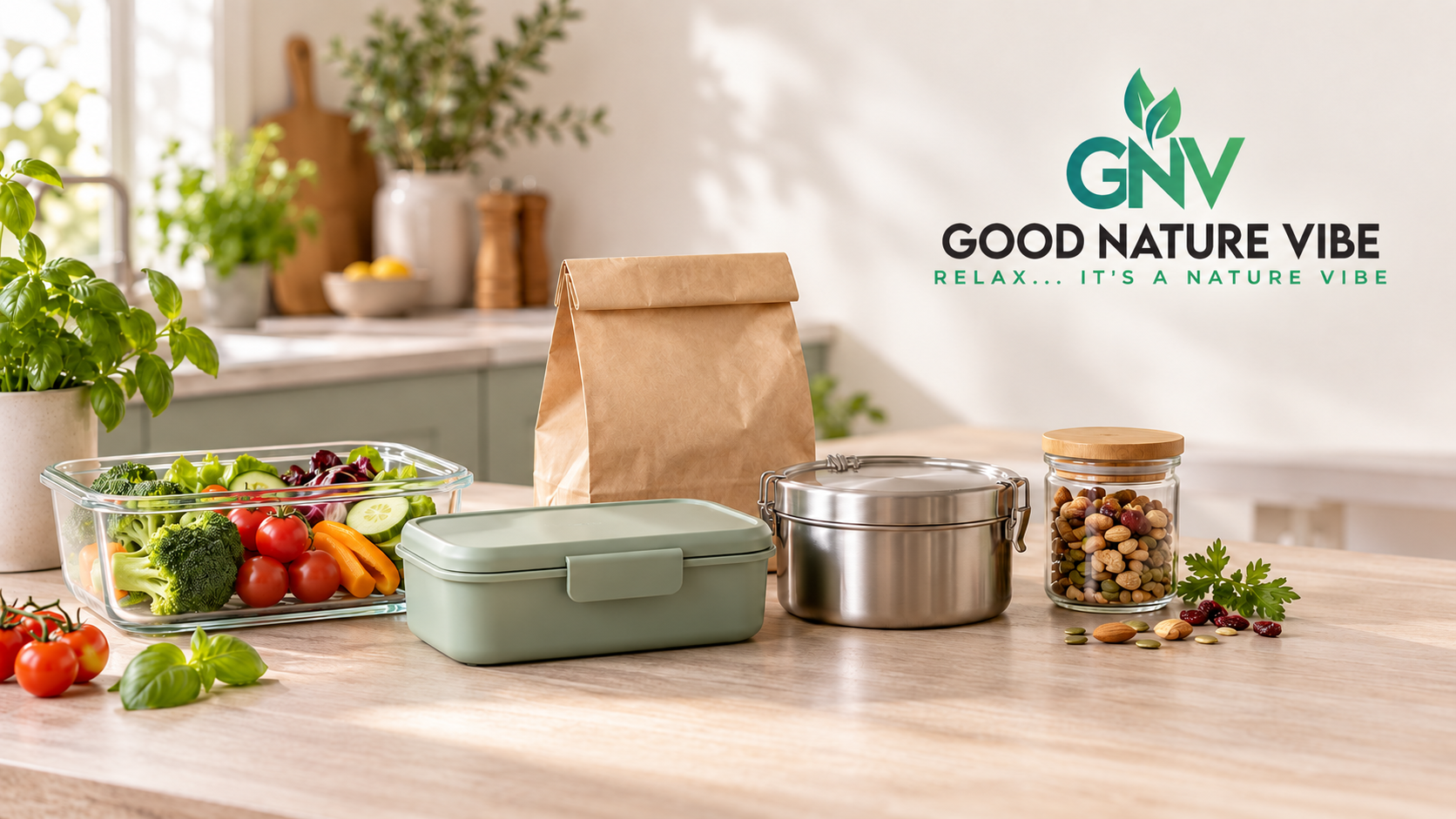
Food packaging does more than hold a product together. It protects food during transport, makes storage easier and can help keep it usable for longer. In a typical kitchen, that job is shared by plastic tubs, glass jars, metal tins, paper cartons, foil and reusable bags.
The question “Which material is best?” therefore needs a little context. A container designed for a cold lunch may not be intended for reheating soup. A glass dish can be convenient, but only if it is suitable for the temperatures and appliances you use. Paper can include a coating, while a reusable box still needs cleaning and care.
You do not need to understand every formulation to make sensible choices. Begin with the intended use, the instructions and the condition of the item. Then consider whether it fits the food, temperature and routine you actually have. The goal is a workable kitchen habit, rather than finding one perfect material for every task.
What makes food packaging suitable?
In the European Union, food contact materials include packaging, storage containers, kitchenware and other articles that touch food. Regulation (EC) No 1935/2004 sets the general framework: intended use must not cause harmful transfer of substances or unacceptable changes to food. These are EU rules; this article is not a complete guide to UK regulatory requirements.
Suitability remains specific to use. Food-contact status does not automatically establish oven, microwave, freezer or dishwasher suitability. Those applications involve different conditions, and the manufacturer may set separate limits for the container and its lid.
Consider the full task. Will the food be cold or hot? Will contact last briefly or throughout storage? Does the meal contain a sauce, and will the box need to travel without leaking? A product suitable for one situation may be inconvenient or unsuitable for another.
Treat the instructions as part of the product. If important information is printed only on the outer packaging, keep a photograph or note. That is especially helpful when a set contains similar-looking pieces with different lids or temperature limits.
Comparing common food packaging materials
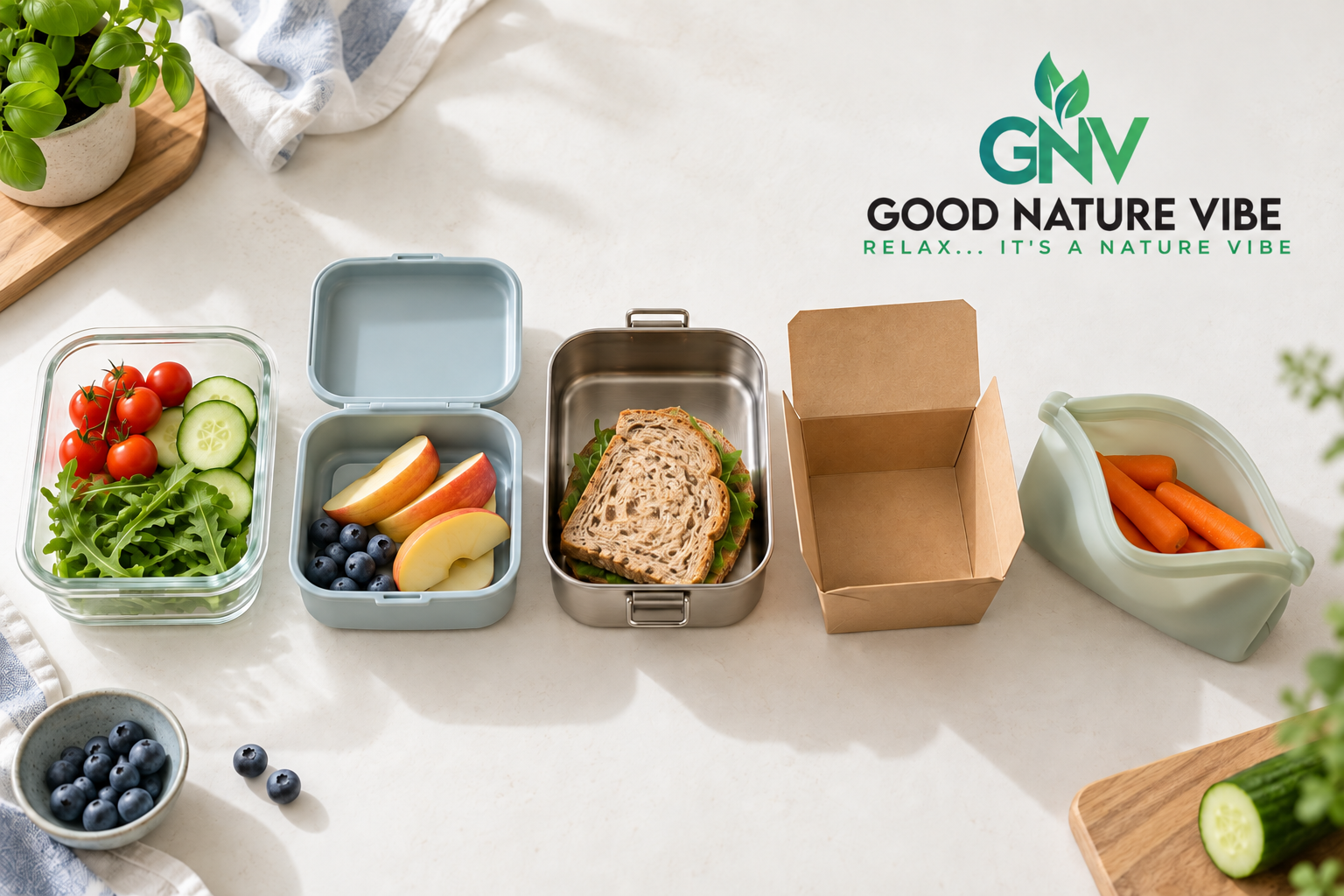
Plastic
Plastic is lightweight and available in many shapes. It can be practical for carrying lunch or organising the fridge. However, plastic is a family of materials, and the material name alone does not tell you every permitted application.
Use a container according to its instructions. A box suitable for cold storage should not be assumed suitable for reheating. Check its surface, shape and closure before reuse. Distortion or a poorly fitting lid can interfere with its function even when the container still looks broadly intact.
A recycling code helps identify the plastic type. It is not an independent microwave, dishwasher or repeated-use approval. If you cannot find the relevant information, choose a product whose intended use is clear.
Glass
Glass food containers can be useful when you want to see leftovers easily and clean the container thoroughly. They may fit a routine that involves storing a meal and later reheating it in the same dish, provided the product is designed for both stages.
Not every glass item is freezer-safe or heat-resistant. A jar that once held a shop-bought product is not automatically an oven dish. Follow instructions on temperature changes and remember that the lid may have different limits from the glass base.
Weight and breakage also matter. A heavier dish may be convenient at home and less convenient in a child's lunch bag. The best choice depends on the job, rather than the appearance of the material.
Metal and aluminium
Metal packaging can protect food from light and air. After opening a tin, transferring leftovers to a suitable covered container can make storage easier to organise. Follow the food label's storage instructions as well as those for the replacement container.
For foil and aluminium trays, consider the food and the appliance. Dutch guidance advises against using aluminium foil or uncoated aluminium cookware to prepare or store very acidic or salty foods. Do not put metal in a microwave unless the exact appliance and product instructions explicitly allow that application.
A coated metal package and a sheet of foil should not be treated as identical. Their construction and intended uses differ. A general claim about “metal” is therefore too broad to settle a specific kitchen question.
Paper and cardboard
Paper and cardboard are familiar choices for dry products and takeaway food. Their appearance can be misleading, however: a package may also include coatings, adhesives or other layers to provide the barrier it needs.
Brown colour does not establish compostability, microwave suitability or a lower environmental impact. Look for the actual instructions. Waste-sorting rules depend on the complete package and local collection system, not just its most visible material.
If a container has become soaked, damaged or difficult to clean, it is unlikely to be a practical storage solution. A fresh reusable container may fit that task better than trying to extend a package beyond its intended purpose.
Silicone and other reusable options
Reusable bags, flexible lids and silicone containers can be useful when their food-contact purpose and temperature range are clearly stated. Check seams, corners and closures, since these influence cleaning and whether the item still works properly.
“Reusable” does not mean indestructible. Nor does it establish unlimited use in every appliance. Choose an item that suits your regular tasks and is straightforward to maintain, rather than collecting alternatives that rarely leave the cupboard.
Can plastic containers go in the microwave?
The practical answer depends on the exact container. Heat food in plastic only when the manufacturer clearly permits microwave use. Follow the instructions on power, time, food type, lid position and ventilation.
When suitability is unclear, transfer the meal to a microwave-safe glass or ceramic dish. A takeaway tub designed for transport is not automatically a reheating container. Check removable film, compartments and lids separately instead of assuming the whole package has one permission.
A microwave-safe label describes an intended application. It does not mean that instructions can be ignored, that heating can continue indefinitely or that a damaged container remains suitable. If the product distorts, cracks or no longer closes properly, reconsider its use.
Food can heat unevenly. Stir when appropriate, follow the meal's heating directions and allow the recommended standing time. Packaging suitability and ordinary food hygiene are complementary parts of reheating, rather than competing concerns.
Keep a simple arrangement at home: place your known reheating dishes near the microwave and store cold-only containers elsewhere. This reduces the need to make the same decision from scratch when you are busy.
How to read food packaging symbols
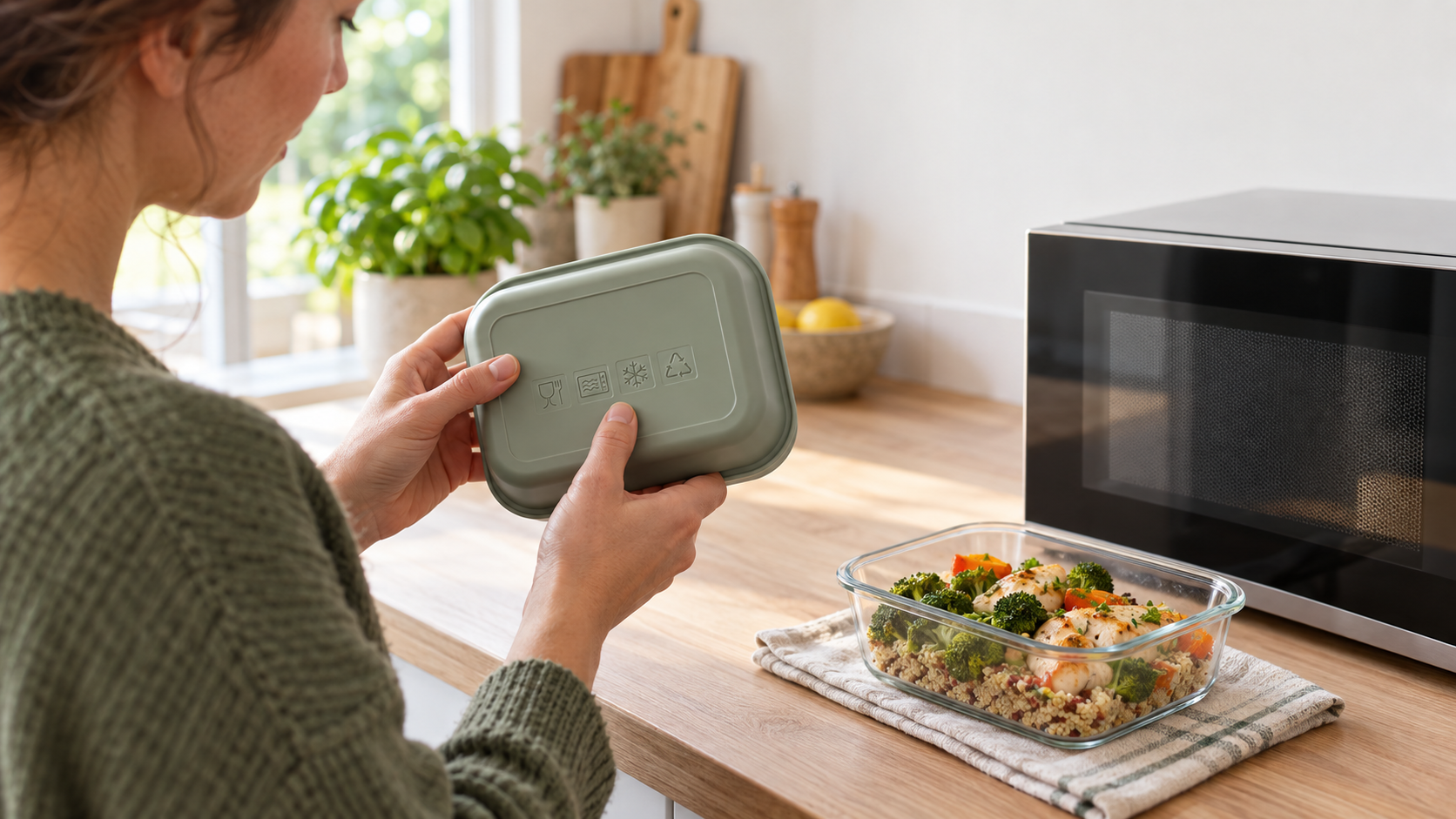
The glass-and-fork symbol indicates intended food contact; it does not establish microwave or freezer suitability. Separate markings or written instructions address appliances and temperature. Their appearance can vary between manufacturers, so use the product guidance to interpret unfamiliar symbols.
Check these points when buying or using a container:
- What is it designed to do: carry, store, freeze or heat food?
- Which appliances are explicitly permitted?
- Does a temperature range or other restriction apply?
- Are the lid, seal and base treated differently?
- How should it be cleaned and maintained?
A recycling code answers a different question. It identifies a material category rather than providing every use instruction. Do not use the number as a shortcut for deciding whether an item can be heated.
If instructions have disappeared, contact the manufacturer with the product reference. A precise answer about your model is more useful than an online chart that groups many different products together.
Reusing packaging: what does the evidence show?
The supplied Dutch draft takes a cautious approach to single-use tubs. A relevant NVWA study adds nuance. In its 2024 investigation, 25 containers were tested using extraction and migration methods. The sample findings supported repeated storage use of polypropylene containers. Microwave and dishwasher use were not tested, with only one example per container type available.
That result does not mean every takeaway tub can be reheated or repeatedly washed in a dishwasher. It distinguishes storage from heat and cleaning conditions. A small sample should not become an unlimited permission for all products made from a similar plastic.
For your routine, purpose-made reusable food containers offer a clearer starting point when their intended uses are documented. If reusing a sales package, consult applicable product information and current official guidance rather than judging suitability from thickness alone.
Cleaning also matters. Can you reach the edges and remove food residues? Does the lid still fit? Is the container dry before it is stored? If the item cannot be cleaned properly or has lost its function, choose another suitable container.
Some packaging can have a second use for organising non-food items. Keep such items clearly separated from food storage, especially if they hold cleaning products or small parts. Reuse should make the household more organised, rather than create confusion.
Can packaging choices reduce microplastics exposure?
Research on particles released from food contact materials is developing. EFSA's review, published 21 October 2025, identified 1,711 publications, selected 122 for data extraction and added eight for context. It found important limitations in methods and particularly little nanoplastics evidence. These counts describe the review, not particles in your meal or a personal risk estimate.
That distinction is useful when a dramatic number circulates online. A particle count depends on the material, test conditions, size range and analytical method. It cannot automatically describe every container, food or household practice.
Following instructions, avoiding unsuitable heating and checking wear are sensible habits. Choosing an appropriate reusable item can also reduce repeated use of disposable packaging. These steps do not demonstrate a measured reduction in your total microplastics exposure.
For broader context, our article on microplastics explains sources in water, food and air. Packaging is one part of that picture, so changing a single material cannot reasonably be presented as eliminating all exposure.
Seven habits for less single-use packaging and less waste
1. Begin with a repeated situation
Choose one activity you do often: packing lunch, carrying a snack or storing dinner leftovers. Find a suitable reusable option for that activity before replacing everything in the kitchen.
A small change that works on busy days is easier to maintain than an ambitious collection of products you rarely use. Start with the task, then choose the container.
2. Match the size to your portions
Select sizes that fit the food you usually store. A useful lid and manageable shape matter as much as a fashionable material. Check cupboard and fridge space before buying a large set.
Containers that nest neatly and have easy-to-match lids can make reuse more convenient. Avoid buying many similar pieces when a few practical sizes already cover your routine.
3. Check the entire storage and heating route
Think through the real sequence: preparation, fridge or freezer, transport, defrosting and reheating. Permission for one stage does not cover the others automatically.
You may prefer separate containers for storage and heating. That is a workable choice when one product does not suit the complete route. Keep the arrangement simple enough that other household members understand it.
4. Bring a clean container where accepted
Your own cup or lunchbox can replace a disposable item in suitable settings. Ask the business whether it accepts your container and follow its hygiene procedure.
Carry it clean, dry and ready to use. A leak-resistant closure is particularly helpful for transport, but it still needs to be handled according to the product's instructions when heating.
5. Buy an amount you can finish
A larger package may use less material per portion, but only helps your routine if its contents are actually used. A smaller household may benefit from a smaller pack that avoids leftovers being forgotten.
Consider the food and packaging together. Visible packaging waste is easier to notice than discarded food, yet both deserve attention when making a practical choice.
6. Make leftovers easy to find
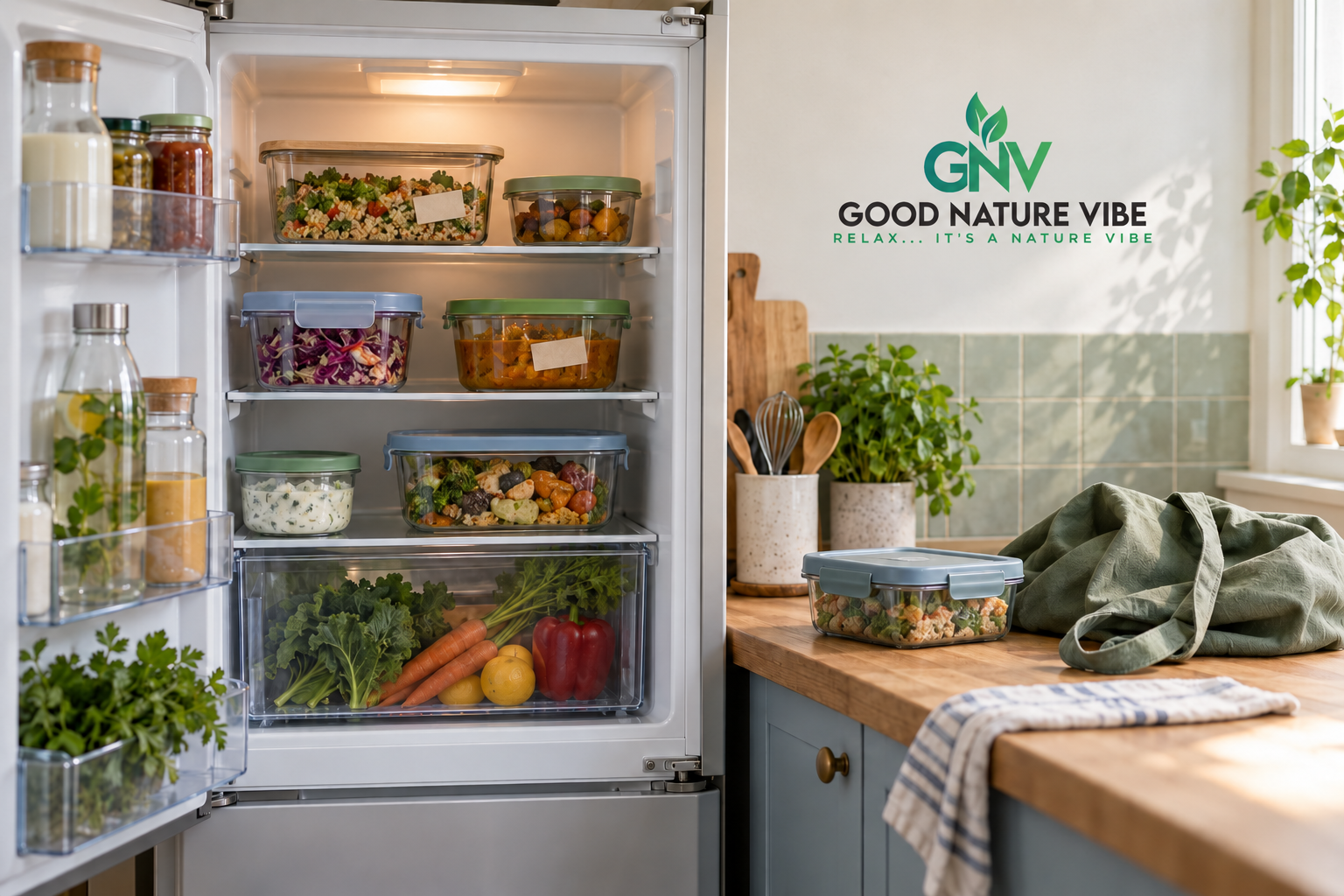
Label a container with its contents and preparation or opening date. Follow relevant food-storage guidance rather than treating the label as a guarantee of unlimited shelf life.
Create an “eat first” area in the fridge. Seeing what needs using can be more useful than buying a completely new set of boxes. Review it before cooking or shopping.
7. Replace items for a clear reason
Keep suitable products in use while they remain functional and can be maintained properly. Replace items that are damaged, difficult to clean or no longer appropriate for the way you use them.
A gradual approach avoids discarding a workable system simply to achieve a particular kitchen aesthetic. Reuse works best when the products actually become part of everyday life.
Is glass always better than plastic?
No material wins in every situation. Glass has advantages for visibility and some storage routines, while plastic can be convenient for light transport. Metal, paper and flexible materials serve different functions and have different limitations.
Environmental comparisons also need context: manufacturing, weight, transport, washing, actual reuse, recycling and avoided food waste can all matter. “Plastic-free” does not establish a complete environmental assessment.
Ask what the package needs to do and whether you will use it regularly. A product that looks ideal but is too heavy, awkward or difficult to maintain may not be the best fit for your household.
Frequently asked questions
Is all plastic food packaging unsafe?
No. Assess the exact product and its intended use. A package suitable for food contact is not automatically suitable for every temperature, appliance or repeated-use pattern.
Can every plastic container be microwaved?
No. Use it for heating only when the manufacturer explicitly allows that use. If permission is unclear, choose a microwave-safe glass or ceramic dish instead.
Are all glass containers suitable for freezing?
No. Check the product and lid instructions, including permitted temperature changes. The material name does not establish freezer suitability for every jar or dish.
Can a single-use tub be reused for storage?
The NVWA sample described above supports nuance for polypropylene storage use. It does not establish universal suitability or permission for microwave and dishwasher use. Check the item and applicable guidance.
Does a recycling code prove microwave safety?
No. It identifies the plastic category. Look for separate microwave instructions and any restrictions affecting the lid, temperature or food.
Will changing packaging eliminate microplastics?
No. Sensible use can avoid unsuitable practices, but it cannot guarantee zero exposure or establish an individual health outcome. Evidence and measurement methods continue to develop.
A practical approach from Good Nature Vibe
Good Nature Vibe encourages clear information and manageable habits. Choosing food packaging need not mean replacing every item or trying to build a perfectly plastic-free kitchen. Begin with the uses you repeat and the instructions that help you do them properly.
The same approach applies to other consumer claims. Our PFAS water filter article explains why the exact product, testing conditions and maintenance matter when assessing a filtration promise. That is a separate water-treatment topic, rather than evidence about a food container.
Explore more health news in the Good Nature Vibe knowledge centre for explanations that put environmental and everyday wellbeing questions into context.
Conclusion
Choosing food packaging means matching the product to the task. Temperature, food type, contact time, cleaning, condition and intended use all matter alongside the material. Clear instructions are more useful than assumptions based on a recycling number or a reassuring appearance.
To reduce single-use packaging, begin with recurring habits and choose items you will actually maintain and reuse. Keep food waste in view and replace products for specific reasons. This gives you a practical routine that can adapt as products and evidence develop.


