
You take clean clothes out of the washing machine. What you cannot easily see are the small fibres that may have come loose during the cycle. Small fibres shed from synthetic polymers such as polyester can be microplastics.
How much a garment releases depends on the fabric, its condition and the washing conditions. The way researchers collect and measure fibres also affects the result. A striking number from one experiment cannot tell you exactly what your own jumper releases.
There are practical choices you can make: avoid unnecessary washes, follow care labels and use an appropriate load. A purpose-designed washing bag or filter may capture some fibres too. None of these measures makes washing completely fibre-free.
How do clothes release fibres?
Textiles are made from fibres arranged into yarns and fabrics. During manufacture, wear, washing and drying, fibres or fragments can become detached.
Inside a washing machine, movement, contact between materials and water contribute to the process. Detached fibres may leave with the wastewater. Wastewater treatment removes a substantial proportion, but not all, of the fibres entering it. Material captured during treatment can enter sewage sludge. The amount leaving a washing machine is therefore not automatically the amount that reaches rivers or the sea.
Washing is therefore one part of a garment’s wider life. Looking only at the wash cycle does not describe every point at which it might shed.
Visible fluff is not automatically microplastic. You also need to know what the fibres are made from.
A few strands left in the drum cannot reveal the total amount discharged with the water. Equally, a drum that looks clean does not demonstrate that no fibres were released.
Are all microfibres microplastics?
No. In environmental research, microfibre describes a small fibre; microplastic describes a small plastic particle. The term microfibre alone does not establish material composition.
Polyester, polyamide and acrylic are examples of synthetic textile materials. Small fibres from these materials can be microplastics. Cotton and wool can also shed, but their fibres are not automatically plastic.
This distinction matters when reading research.
| Reported measurement | What should you check? |
|---|---|
| Total microfibres | Was the material composition identified? |
| Synthetic fibres | Which polymers were confirmed? |
| Fibre count | Which sizes were included? |
| Fibre mass | Does this include all fibres or only plastic fibres? |
A mixed load can release several fibre types. Its total fibre loss should not automatically be described as an equivalent amount of plastic.
For broader background, read our explanation of microplastics in water, food and air.
Why do some garments shed more than others?
The material name on a label provides useful information, but it does not describe every feature of the fabric.
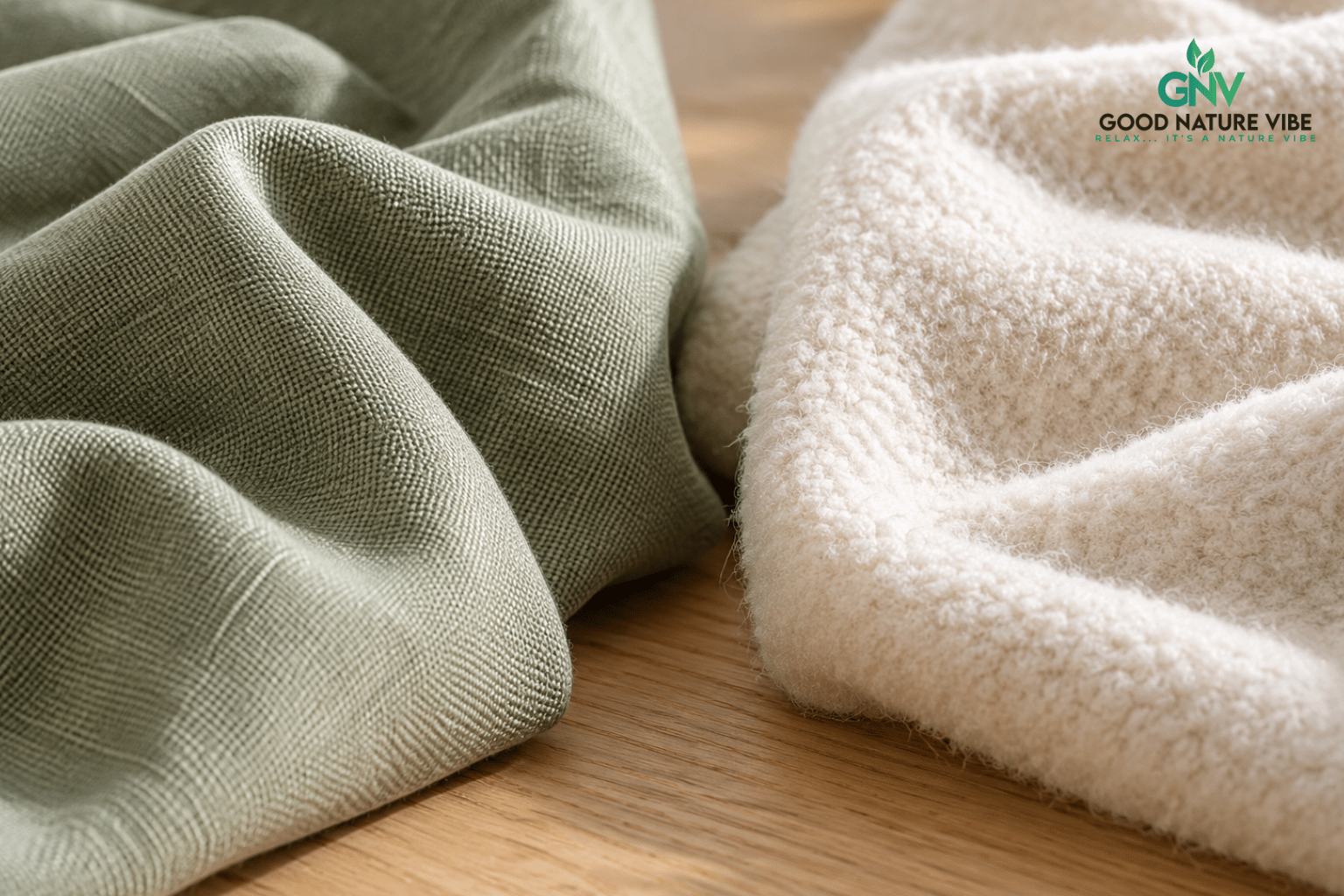
Researchers also consider yarn construction, fabric structure, finishing, previous use and washing conditions. A brushed surface can behave differently from a smooth woven fabric.
Hazlehurst and colleagues, in research published in 2023, examined how fabric and laundering variables affect fibre release. Their findings did not identify one fabric characteristic that explained every difference.
Two garments with the same stated fibre composition may therefore shed differently.
This makes simple material rankings difficult to apply. Before treating a result as relevant to a purchase, check which fabrics were tested and how.
A statement such as “polyester releases this many fibres” leaves out important details unless it identifies the garment, test conditions and measurement.
Why do measurements vary so much?
A laboratory test using small fabric samples is different from washing a full household load. Studies also collect and quantify fibres in different ways.
Four questions help put a result in context.
What was washed?
Was it a new garment, prepared fabric samples or a mixed load of worn clothes? These are different test situations.
How was it washed?
Temperature, cycle duration, movement, load size and the amount of water relative to fabric can vary.
What was collected?
Filters retain different sizes of material. Some smaller fibres may fall outside a study’s collection or detection range.
How was the result reported?
Fibres per wash, fibres per litre and milligrams per kilogram of textile are different measurements.
A large number of lightweight fibres does not necessarily represent more material than a smaller number of heavier fibres. Researchers also need controls for fibres accidentally introduced while handling samples.
These limitations do not make the research unhelpful. They define which comparisons are reasonable.
What can a study tell you about your own washing machine?
A study can show that one setting released fewer fibres under its test conditions. That does not establish the same result for every machine and garment.
Lant and colleagues studied real soiled household laundry in 2020. In a comparison of 38 European laundry loads, with 19 in each group, a 15°C, 30-minute cycle produced approximately 30% less measured microfibre mass than a 40°C, 85-minute cycle.
This was a measurement of microfibres, not exclusively confirmed plastic fibres. It should not be presented as a universal 30% reduction in microplastics. The study also examined load size, with lower release per kilogram in larger loads under the tested conditions.
Several features can change between programmes, so the difference cannot automatically be attributed to temperature alone. The research also involved a detergent manufacturer, which belongs in its research context.
Use such findings to inform practical decisions. Avoid turning them into a promise that a particular button on your machine will deliver a fixed reduction.
Start by avoiding unnecessary washes
Consider whether a garment needs washing before putting it in the basket.
A jumper worn briefly may sometimes need airing rather than a full cycle. A small mark may be suitable for spot cleaning. Make that decision according to the garment’s use, condition and care instructions.
Skipping an unnecessary wash avoids that washing event, including its water, detergent and energy use.
This is not a rule to wash every item less frequently. Underwear, sportswear and heavily soiled clothing require different consideration from a lightly worn cardigan.
The aim is appropriate care that keeps clothes usable.
Washing synthetic clothes: which choices are practical?
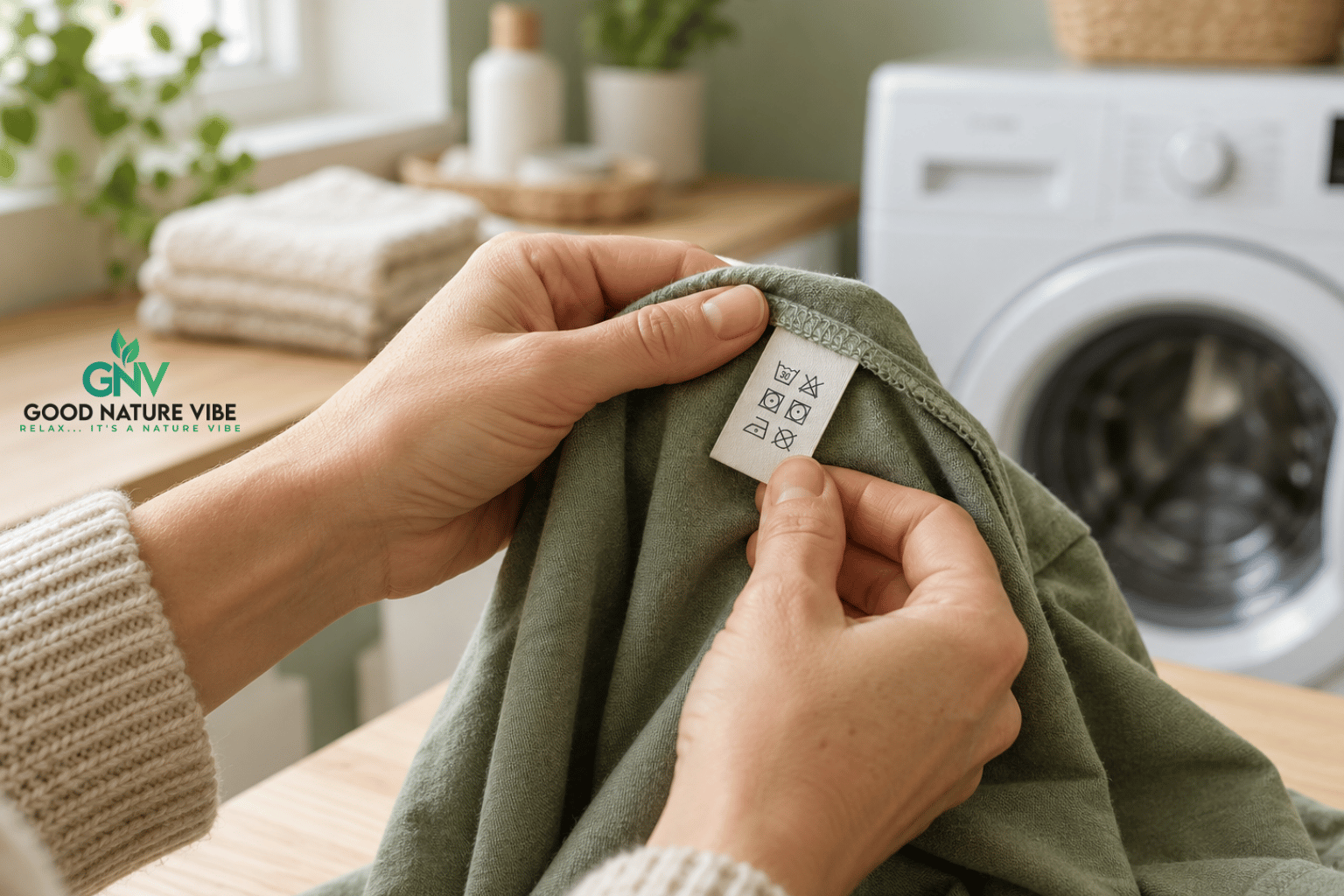
Start with the care label and your machine’s instructions. Then choose a cycle suitable for the fabric and the level of soiling.
Use an appropriate load
Where practical, collect compatible items instead of running very small loads. Stay within the programme’s permitted capacity.
A synthetics programme may allow less laundry than a cotton programme. A full suitable load does not mean packing the drum tightly.
Avoid a higher temperature than necessary
A lower temperature may be appropriate when the garment, cleaning needs and any hygiene requirements allow it.
There is no universal temperature that guarantees the lowest shedding for every fabric.
Follow detergent dosing instructions
Match the dose to the load, soiling and water hardness.
Adding more detergent is not automatically better. Nor should a particular detergent be described as a proven microplastic solution without suitable evidence.
Consider the complete programme
A short cycle may suit lightly soiled clothes, but it is not the right option for every load.
Check its purpose and capacity. The programme name alone does not tell you how much fibre it releases.
Is a delicate cycle always better?
Not necessarily.
Kelly and colleagues investigated water volume in 2019 using polyester textiles. In the first wash, the tested delicate cycle released approximately 800,000 more fibres than the lower-water standard cycle. The difference was also reported as 94 milligrams per kilogram of textile.
These figures concern the tested fabrics and programmes, not every domestic wash. One author was affiliated with a detergent manufacturer.
This does not mean you should wash delicate garments against their care instructions. It shows why gentler-sounding programme names do not automatically indicate lower fibre release.
Use a delicate cycle when the fabric needs it. Do not select it solely on the assumption that it always sheds less.
Can a washing bag or filter help?
A purpose-designed washing bag or external filter can capture some released fibres. It should not be assumed to catch everything.
When considering a claim, ask:
- Which fibres and sizes were tested?
- Under which washing conditions?
- Was performance measured by count or mass?
- What use and maintenance instructions apply?
- Is the device compatible with the machine?
An ordinary protective laundry bag is not automatically tested for microplastic capture.
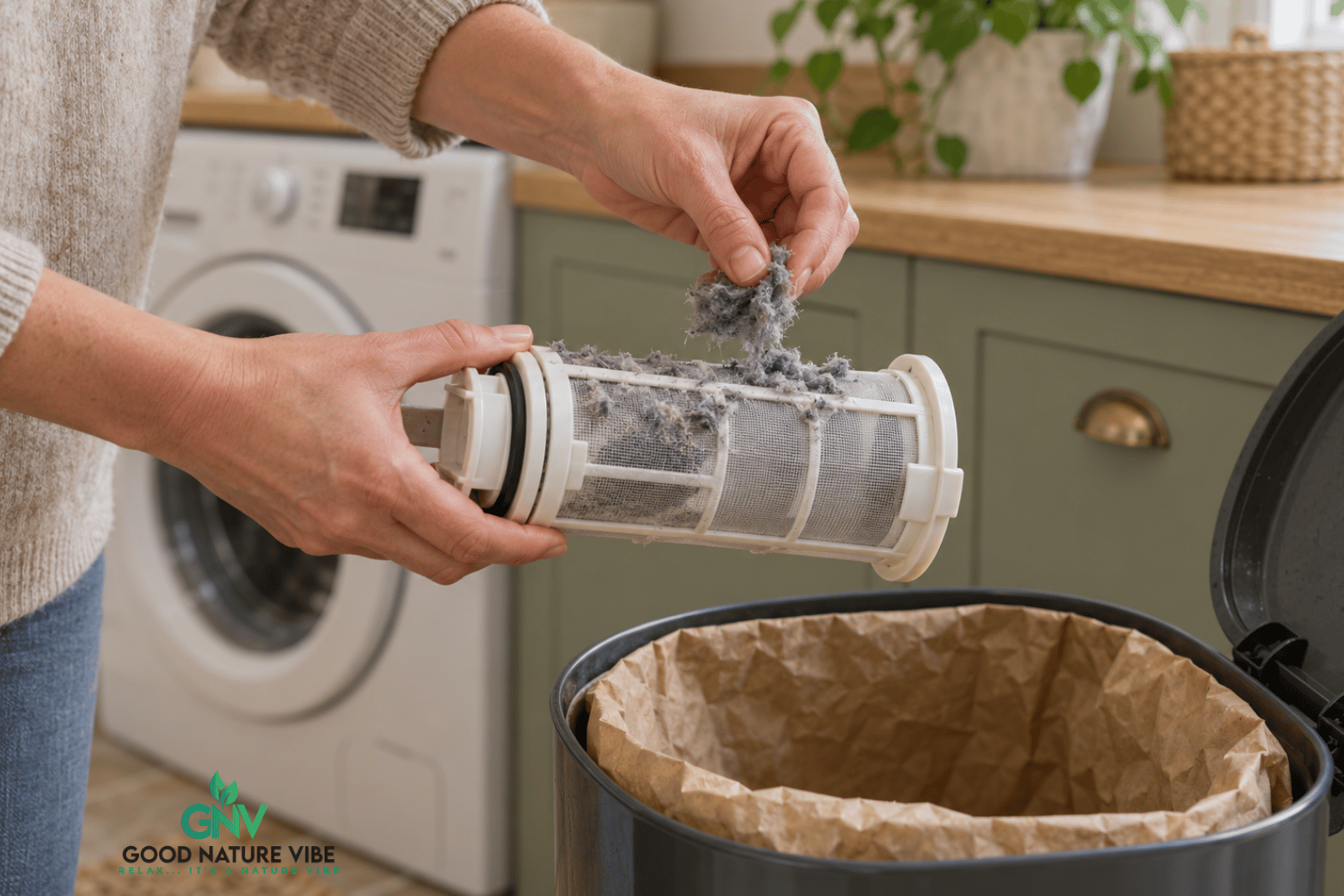
Remove collected lint and place it in the general rubbish, following local waste guidance. Follow the device’s cleaning instructions rather than rinsing the collected material back down the sink.
A filter is an additional measure. It does not make an unsuitable washing programme appropriate for the garment.
Can you measure the difference at home?
Collected fluff shows that some material has been retained. It is not a complete measurement of everything released or everything that escaped.
Without analysis, you cannot reliably identify its material composition. Smaller fibres that pass through remain outside that visual check.
More fluff after a wash might reflect different clothes, a larger load or a change in how the device was used.
A simple record can still help organise your routine.
| What you can record | What it cannot establish |
|---|---|
| Programme and load | Exact plastic discharge |
| Why the clothes needed washing | A personal health effect |
| Device use and maintenance | Complete fibre capture |
| Garment condition | A full environmental assessment |
Use the record to keep practical habits consistent, rather than treating it as a laboratory test.
Should you replace synthetic clothing?
There is no general reason to discard usable synthetic clothes because of this issue alone.
Replacement clothing also requires materials and production. Natural fibres can shed too, and choosing them does not resolve every environmental question.
Look after existing garments and follow their care instructions. When a replacement is needed, consider suitability, durability and specific evidence about the fabric.
A claim such as “reduced shedding” becomes more useful when it explains what was compared and under which conditions.
Frequently asked questions
Do all clothes release microplastics?
Not all textile fibres are plastic. Synthetic materials can release microplastic fibres. Cotton and wool can also shed fibres, but these are not automatically microplastics.
Is washing at 30°C always the best choice?
No. Choose a temperature suitable for the care label, soiling and any hygiene requirements. A lower temperature does not guarantee minimum fibre release from every garment.
Does a washing bag capture all microplastics?
No. A suitable bag may capture some fibres. Performance depends on its design, the fibres, use and test conditions.
Is a delicate cycle always better for reducing shedding?
No. The amount of water relative to fabric also matters. One study found greater shedding from a delicate cycle using relatively more water. Follow the garment’s care instructions.
Should collected lint be rinsed down the sink?
No. Place collected lint in the general rubbish, following local waste guidance, and follow the device’s maintenance instructions. Rinsing it away returns the fibres to wastewater.
Does lower fibre release prove a health benefit?
No. Measuring fibre release during washing does not demonstrate a personal health effect. This article concerns laundry choices and environmental emissions.
Good Nature Vibe: clear information about everyday choices
When reading about microplastics, distinguish what was measured from what is inferred and what remains uncertain.
Good Nature Vibe’s page on quality and verifiable product information explains how it handles available documentation and product claims.
That description is not independent evidence that a washing bag, filter or other device has been tested. A specific claim still needs relevant product information.
If you have a question about a claim attached to a GNV product, contact Good Nature Vibe. Include the product name and the exact statement you would like explained.
Conclusion
Clothes can release fibres during washing. With synthetic textiles, some may be microplastic fibres. Actual shedding depends on the garment and washing conditions; the reported amount also depends on the collection and measurement method.
Start with manageable choices: avoid unnecessary washes, follow care labels, use suitable loads and maintain any capture device correctly.
These steps do not make laundry fibre-free. They provide practical options without turning a shedding measurement into a detox claim or health promise.


