

You pull a polyester top out of the laundry basket and find three plausible settings on the machine. The synthetics, quick-wash and mixed-load programmes all offer 30°C. Which one should you choose? The answer starts with the care label inside the garment.
To wash polyester clothes, check whether the care label permits machine washing, check the maximum temperature and any bars under the wash symbol. Then choose a programme that meets those instructions. Check the drying symbol separately. If the label specifies hand washing, professional care or a particular drying method, follow that instruction.
Two garments can both contain polyester and need different treatment. A plain T-shirt, a lined jacket and a pleated skirt have different constructions. This guide shows you how to turn the symbols on each garment into settings you can actually use.
Start with the garment’s care label
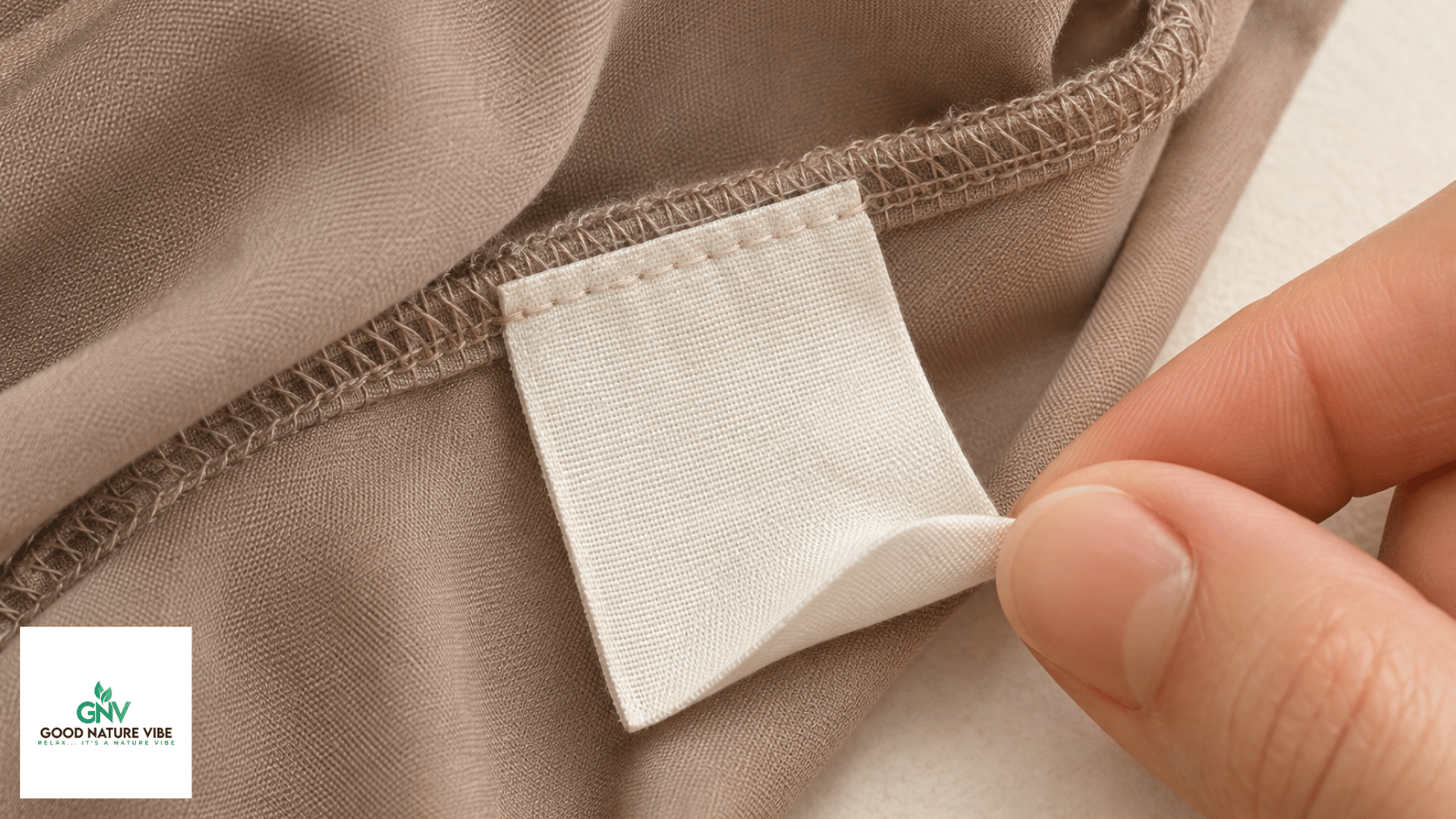
Look inside the side seam, near the neck or along the waistband. Some garments have a stack of labels. One may list the fibre composition and another may carry the care symbols and written instructions. Check both sides of the labels before choosing a programme.
The fibre label tells you what the garment is made from. The care label tells you how its manufacturer says to look after the finished garment. The care instructions apply to the entire garment, including any lining, print, trim or fastening. For a polyester blend, use the same approach and follow the instructions for the garment as a whole.
What do the main laundry symbols mean?
|
Symbol on the label |
What to check |
|---|---|
|
Wash tub with a number |
The number is the maximum washing temperature in degrees Celsius. |
|
One bar below the wash tub |
The garment needs a mild washing process. |
|
Two bars below the wash tub |
The garment needs a very mild washing process. |
|
Hand in the wash tub |
Follow the hand-wash instruction and any temperature guidance on the label. |
|
Crossed-out wash tub |
The garment should not be washed. Check the label for the permitted care method. |
|
Square with a circle inside |
Check the dots for the permitted tumble-drying setting. One dot indicates low temperature. |
|
Crossed-out square with a circle inside |
The garment should not be tumble dried. |
Read the wash tub and the bars underneath it together. A tub marked 30°C with one bar gives you two instructions. Keep the water at or below 30°C and use a mild programme. Check the machine manual to see which programme provides the required wash action.
Which washing programme should you use for polyester?
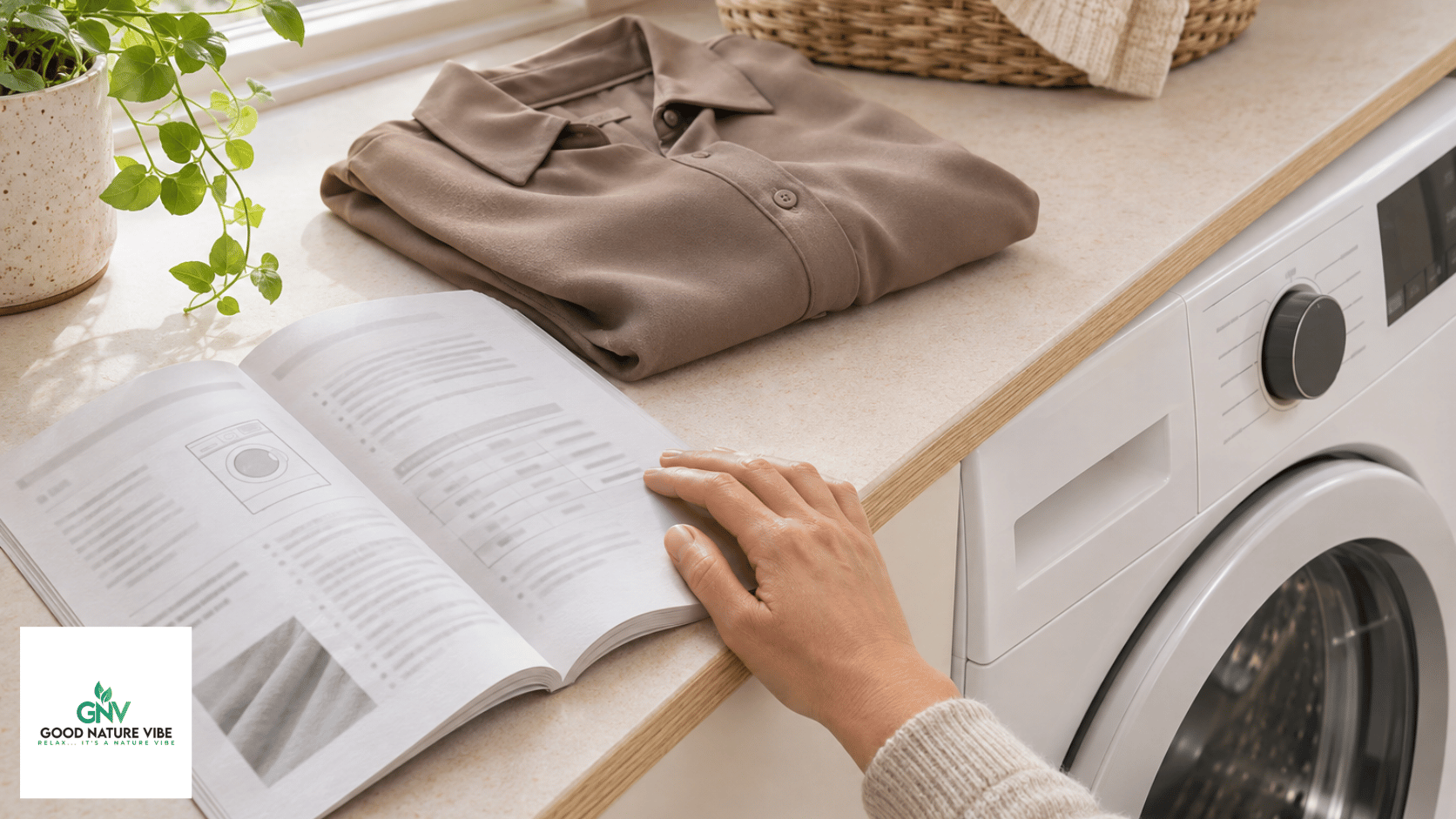
For machine-washable polyester, start by checking the synthetics or easy-care programme in your machine manual. Look up the programme’s wash action, available temperatures and maximum load. Programme names vary between machines. A setting called “mixed fabrics” on one model may work differently on another.
If the label calls for a very mild process, check whether your machine has a programme that meets that requirement. A setting labelled “delicates” is worth checking in the manual. Use the garment instructions and programme description together, especially for lightweight blouses, pleats, decorative details or delicate linings.
Is a quick wash suitable?
A quick wash can be convenient for a small, lightly soiled load when its settings meet the care label. Before selecting it, check its temperature, load limit and wash action. Programme length tells you how long the wash runs. The manual can tell you whether the wash action suits your garment.
If the label permits a normal machine wash and your quick programme is suitable for the item, you can use it. If the label requires a mild or very mild wash, look for a programme your manual describes as suitable for that level of care.
How much laundry should you put in the machine?
Use the load limit for the selected programme. The maximum capacity advertised for your washer may apply to its cotton programme, while its synthetics or delicates programme may take less. The programme table in your manual gives you the figure to work with.
Sort your load by compatible colours and care instructions. A dark polyester top and dark jeans may look like an easy pairing, but a lightweight top is better washed with similar items if the jeans have heavy fastenings or need a different programme.
What temperature should you wash polyester at?
The number inside the wash tub is a maximum. Choose a temperature within that limit and a programme that also matches the wash action on the label. Consider how soiled the garment is and check the detergent instructions before selecting a temperature.
Can you wash polyester at 30°C?
Yes, when the care instructions allow machine washing at that temperature. For everyday polyester clothing that is lightly soiled, 30°C can be a practical option if it suits the garment and detergent instructions. One bar under the tub calls for a mild programme. Two bars call for a very mild programme.
Imagine a blouse marked 30°C with one bar. On your machine, the regular mixed programme and the synthetics programme both offer 30°C. If the manual identifies the synthetics programme as the mild option for that type of garment, that is the setting that matches both parts of the label.
Can you wash polyester at 40°C?
Yes, if the garment’s care label permits 40°C and you choose the required wash action. A 40°C label gives you room to select a lower temperature where the garment and detergent instructions allow it. For a mixed load, make sure every item can handle the settings you choose.
If one top has a 30°C maximum and another allows 40°C, you can wash them together at 30°C when their colours and wash-action requirements are compatible. If one item needs a very mild process and the other needs a different treatment to clean properly, washing them separately makes the decision easier.
What if the label is missing or faded?
Look for the manufacturer’s care instructions for the exact product or style. An order confirmation, model number or product page can help identify it. This is especially useful for lined coats, pleated clothes and garments with special finishes, where the construction can affect the care method. If you can’t confirm the instructions, ask the manufacturer or a professional cleaner before choosing a wash or drying process.
A quick check before you press start
Check the pockets, remove detachable pieces if the maker instructs you to, and prepare any zips or fastenings as directed. If there’s a mark, check whether the garment allows pre-treatment and read the stain remover’s directions. For a printed or embellished garment, check whether the manufacturer asks you to turn it inside out.
Dose the detergent according to its instructions for your load size, water hardness and level of soiling. If you’re washing a sports top or a garment with a special finish, look for any instructions about detergent or fabric conditioner on the garment or product page.
Polyester garments can shed small fibres in the wash. Our guide to microplastics from clothing during washing explains what researchers measure and why results vary.
Can you tumble dry polyester?
You can tumble dry a polyester garment if its care label allows it. Look for the square with a circle inside. If it has one dot, select a low-temperature tumble-drying setting. If the symbol is crossed out, follow a permitted air-drying method instead.
Check the actual drying settings on a washer-dryer. Some combined programmes run straight from washing into drying. If your garment can go in the washing machine but has a crossed-out tumble-dry symbol, select a wash-only programme and remove the garment when the wash finishes.
Should you hang it up or dry it flat?
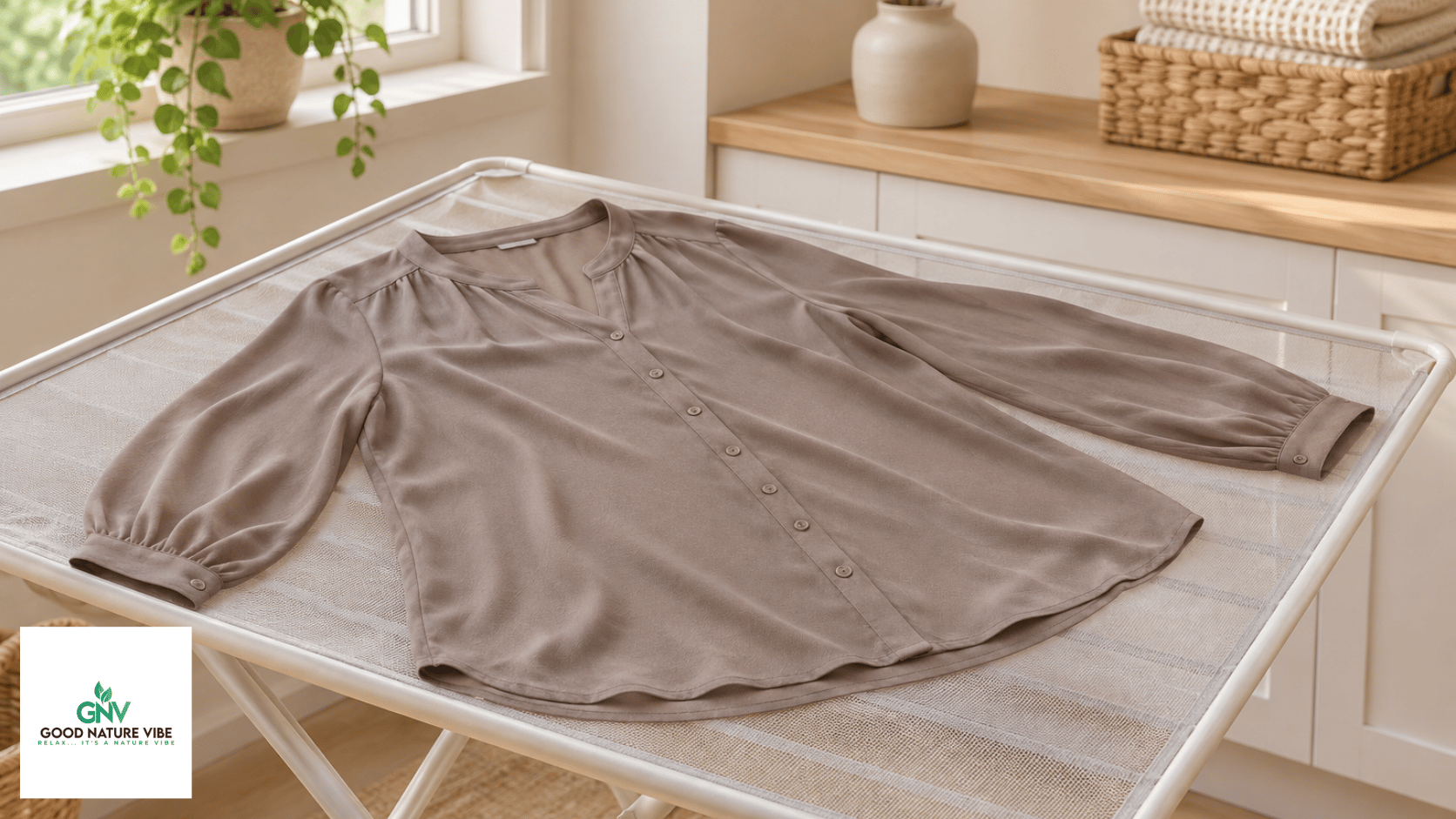
Use the natural-drying instructions if they appear on the label. A garment may be suitable for line drying, flat drying or drying in the shade. If a knit or blouse specifies flat drying, support it on a clean, flat surface or suitable rack and gently arrange it back into shape. If the garment allows hanging, use a rack or hanger that supports it without pulling on one area.
Once the garment is dry, check its separate ironing instructions if you want to remove creases. If the label permits ironing, use the setting specified for the garment and follow any written directions, such as ironing on the reverse.
Three examples of choosing the right settings
|
What your garment label says |
What to do |
|---|---|
|
Polyester T-shirt · 30°C, normal machine wash, tumble drying crossed out |
Choose a compatible machine programme at 30°C or lower and use an air-drying method the label allows. |
|
Polyester blouse · 30°C with one bar, dry flat |
Choose a mild programme at 30°C or lower and lay the blouse flat to dry. |
|
Polyester-blend trousers · 40°C with one bar, tumble drying with one dot |
Choose a mild wash at 40°C or lower. If you tumble dry, use the low-temperature setting. |
These examples show how a change in one symbol affects your choices. When you sort a load, compare the washing instructions first. Before transferring the load to the dryer, take out any garments that need to air-dry.
Frequently asked questions
What is the best programme for washing polyester clothes?
Use the programme that matches your garment’s care label. A synthetics or easy-care programme is often suitable for machine-washable polyester, but check the machine manual for its wash action, temperature and load limit.
Should I wash polyester at 30°C or 40°C?
Use the temperature on the care label as your maximum. If the garment allows 30°C or higher, 30°C can be suitable for a lightly soiled item. Choose 40°C only if the label permits it, and use the wash action indicated by any bars under the wash tub.
Can you tumble dry polyester on low heat?
Yes, if the care label permits low-temperature tumble drying. Look for a square with a circle and one dot. If the tumble-drying symbol is crossed out, use an air-drying method allowed by the label.
Can I wash polyester and cotton together?
Yes, if the garments have compatible colours, temperatures and wash-action requirements. If one garment needs a milder process or a lower temperature, choose settings that suit both items or wash them separately.
What does one line under 30°C mean on a care label?
It means the garment needs a mild washing process at a maximum of 30°C. Choose a compatible programme with reduced wash action and keep the temperature at 30°C or below.
Good Nature Vibe
At Good Nature Vibe, we start with the information you can check. In the laundry room, that means reading the garment label and the washing machine’s programme table together. The method is useful when you buy something new, inherit a garment with unfamiliar symbols or switch to a machine with different settings.
For more on where researchers look for these particles, see our guide to microplastics in water, food and air. Our comparison of microplastics in tap water and bottled water looks at how particle size and testing methods affect the results.
Conclusion
The next time you wash polyester, start with the tub symbol. Check the maximum temperature and count any bars under it. Then match those instructions to the programme and load limit in your machine manual. When the wash is finished, check the drying symbol before choosing a tumble dryer, hanger or flat rack.
For a mixed load, make the decision garment by garment. Two polyester garments can share a wash programme and still need different drying methods. Check both sets of instructions before you start, especially if you plan to use a combined wash-and-dry programme.


