
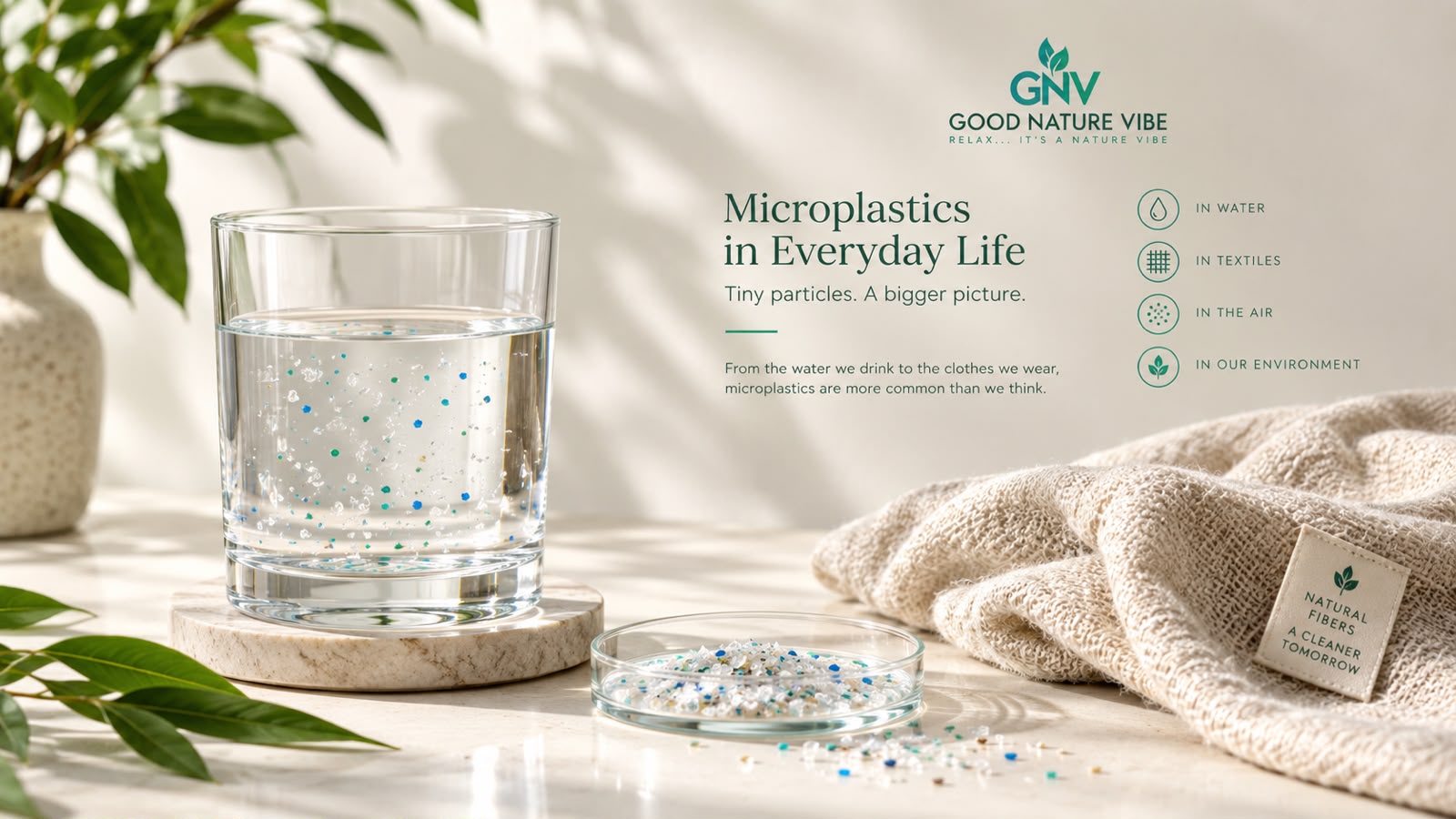
Microplastics are tiny plastic particles that have become a growing focus of scientific research because of their presence throughout the environment. These particles have been detected in different environmental systems, including water, soil, air, and everyday materials.
Microplastics can come from the breakdown of larger plastic products as well as from everyday sources such as synthetic textiles, tyre wear, and industrial activities. Because of their small size, these particles can spread easily through different environmental pathways.
Researchers are studying how humans may come into contact with microplastics through routes such as food, drinking water, and air. Recent studies have also investigated the presence of plastic particles in human tissues and biological samples. However, exposure does not automatically mean that proven health effects have been established.
In this article, we explore what microplastics are, where they come from, how human exposure can occur, and what current scientific research says about their potential impact. By focusing on evidence-based information, we can better understand what is known, what remains uncertain, and how people can make informed choices about plastic use.
What Are Microplastics (and Nanoplastics)?
What Are Microplastics
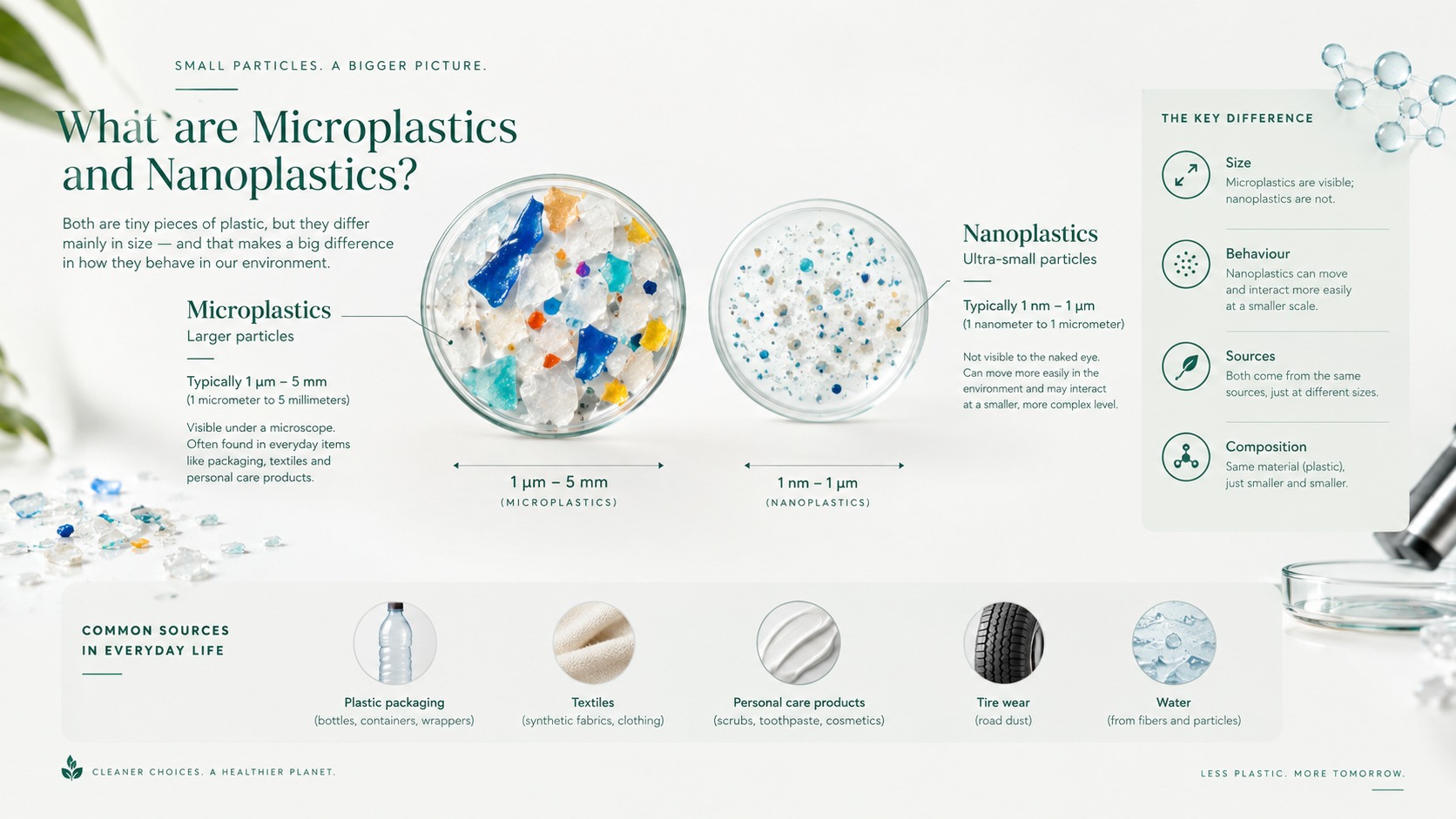
Microplastics are small plastic particles that are generally defined as being smaller than 5 millimetres in size. They can be found in different environmental systems and are studied because of their widespread presence in water, soil, air, and everyday materials.
Microplastics can originate from two main sources: primary and secondary microplastics.
Primary Microplastics
Primary microplastics are particles that are intentionally produced at a small size for specific applications. These may include industrial uses or products where small plastic particles are added during manufacturing processes.
Secondary Microplastics
Secondary microplastics are created when larger plastic materials break down into smaller fragments over time. Factors such as sunlight, temperature changes, weathering, and mechanical wear can contribute to this breakdown process.
What Are Nanoplastics?
Nanoplastics are even smaller plastic particles that are typically measured at the nanoscale. Because of their extremely small size, they are more difficult to detect and analyse compared with larger microplastics.
Recent advances in analytical techniques have improved the ability of researchers to study smaller plastic particles. However, scientists continue to highlight that measurement methods and standardisation are still developing.
Understanding the size, composition, and characteristics of plastic particles is important because research findings can vary depending on the methods used to detect and analyse them.
Why Are Nanoplastics Harder to Detect?
Nanoplastics are more challenging to study because of their extremely small size. Unlike larger microplastic particles, nanoplastics require advanced analytical techniques to detect and measure accurately.
Researchers are still improving methods for identifying these very small particles, and differences in measurement techniques can influence study results. This means that comparing findings between studies requires careful interpretation.
As detection technologies continue to develop, scientists are gaining a better understanding of where nanoplastics are found and how they behave in environmental systems.
How Do Microplastics Get Into Your Body?
Through Food and Drinking Water
Microplastics can enter the human body through different exposure pathways, including food and drinking water. Plastic particles have been detected in various environmental systems, and researchers are studying how these particles move through food and water chains.
Studies have investigated microplastics in seafood, salt, packaged foods, and drinking water. However, the amount and type of particles detected can vary depending on the source, location, and measurement techniques used.
It is important to understand that detecting microplastics in food or water shows possible exposure, but it does not automatically mean that harmful health effects have been proven.
Through Air and Household Dust
Air and household dust are another possible pathway of microplastic exposure. Small plastic fibres can be released from synthetic textiles, household materials, and other everyday products.
Through Skin Contact
Skin contact is another area being investigated by researchers. While microplastics may come into contact with the skin through different products and environments, the extent to which plastic particles can pass through the skin is still being studied.
Are Microplastics Harmful to Your Health?
What Research Has Found So Far
Scientific research is currently investigating how microplastics interact with the human body and what their possible effects may be. Recent studies have detected plastic particles in human biological samples, showing that human exposure can occur.
Leslie et al. (2022)
A study published by Leslie et al. (2022) investigated plastic particle pollution in human blood samples. The researchers analysed blood samples from 22 healthy adults and detected plastic particles in 17 of the 22 samples.
The study provided evidence that plastic particles can be present in human blood. However, the researchers highlighted that more investigation is needed to understand the possible biological effects of these particles.
Jenner et al. (2022)
Another study by Jenner et al. (2022) analysed human lung tissue samples to investigate the presence of microplastics in the respiratory system.
The researchers examined 13 lung tissue samples and detected 39 plastic particles in 11 samples across different regions of the lungs.
These findings show that microplastic exposure is an active area of scientific research. However, detecting particles in human tissues does not automatically mean that specific health effects have been proven.
What We Still Do Not Know
Although research has confirmed that humans can be exposed to microplastics, many questions remain unanswered.
Scientists are still studying:
-
How different particle sizes behave inside the body
-
How long particles may remain in biological systems
-
Whether certain types of particles have different effects
-
What the long-term implications of exposure may be
Current evidence shows that microplastics are an important research topic, but more studies are needed before clear conclusions about long-term health effects can be made.
Tap Water vs. Bottled Water: What Do We Know About Microplastics?
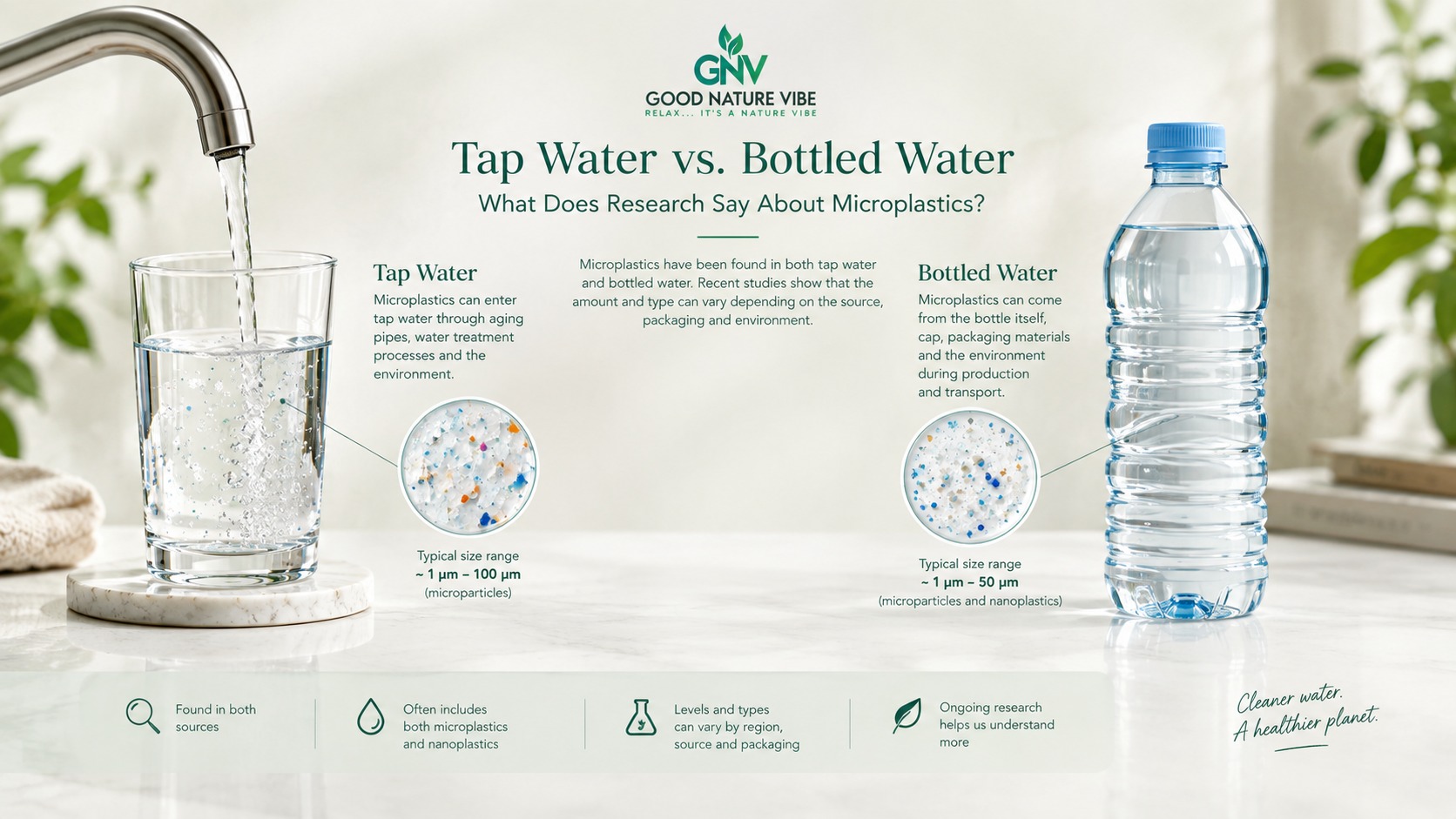
Microplastics have been detected in different types of water, including both tap water and bottled water. However, comparing results between studies can be challenging because researchers use different sampling methods, detection techniques, and definitions of particle size.
What Research Says About Bottled Water
A study by Qian et al. (2024) investigated nanoplastics and microplastics in bottled water using advanced detection techniques.
The researchers estimated that bottled water contained approximately 240,000 plastic particles per litre on average. The study also showed that improved analytical methods can detect many smaller plastic particles that were previously difficult to identify.
These findings highlight that the number of detected particles can depend strongly on the technology and methods used during analysis.
Why Results Differ Between Studies
Different studies may report different levels of microplastics in water because researchers use different approaches, including:
-
Different detection technologies
-
Different particle size ranges
-
Different sample sources
-
Different measurement methods
Because of these differences, results from separate studies cannot always be directly compared.
What Do We Know About Tap Water?
Research has also detected microplastics in tap water samples from different locations. However, reported amounts vary widely depending on location, water treatment processes, and analytical methods.
Current research suggests that both tap water and bottled water can contain plastic particles, but scientists are still improving methods to better understand their distribution and characteristics.Learn more about microplastics in water, food, and air and how these exposure pathways are studied.
Important context:
The presence of microplastics in water shows possible exposure, but it does not by itself prove specific health effects. Researchers continue to investigate what these findings mean for human health.
How Can You Reduce Your Exposure to Microplastics?
Reducing microplastic exposure is not about eliminating every possible source of plastic. Instead, practical choices can help reduce unnecessary plastic use and limit avoidable exposure in everyday life.
Food and Water Habits
Small changes in daily habits can help reduce unnecessary contact with plastic materials.
Practical steps include:
-
Choosing reusable bottles and containers where practical
-
Using glass or stainless-steel storage options when suitable
-
Reducing unnecessary single-use plastic products
-
Following proper storage recommendations for food and beverages
These actions focus on reducing avoidable plastic use rather than suggesting that complete avoidance is possible.
Textiles and Household Dust
Synthetic textiles can release small plastic fibres during use and washing. Household dust may also contain fibres from different materials found indoors.
Some practical approaches include:
-
Washing synthetic fabrics carefully according to garment instructions
-
Considering washing bags or filtration solutions designed to reduce fibre release
-
Keeping indoor environments clean through regular cleaning practices
More research is still being conducted on the most effective ways to reduce fibre emissions from textiles.
Making Informed Material Choices
Understanding the materials used in everyday products can help consumers make more informed decisions.
Examples include:
-
Choosing durable products that can be reused for longer periods
-
Learning how products are made and what materials they contain
-
Considering alternatives to unnecessary plastic items when available
The goal is not to create fear around plastic but to encourage awareness and responsible choices based on available information. You can also explore more mindful lifestyle choices through Good Nature Vibe's wellness articles.
Frequently Asked Questions
What are microplastics?
Microplastics are small plastic particles that are generally smaller than 5 millimetres in size. They can come from the breakdown of larger plastic products or from specific sources where small plastic particles are produced. Nanoplastics are even smaller particles that require advanced methods to detect and study.
Are microplastics harmful to human health?
Researchers are currently studying the possible effects of microplastics on human health. Although human exposure to microplastics has been demonstrated, more research is needed to better understand the potential long-term effects.
Does bottled water contain more microplastics than tap water?
Research has detected microplastics in different types of water, including bottled water and tap water. A study by Qian et al. (2024) estimated approximately 240,000 plastic particles per litre in bottled water using advanced detection methods. However, results can vary between studies because researchers use different measurement techniques.
How can I reduce my exposure to microplastics?
People can reduce unnecessary plastic exposure through practical choices, such as reducing single-use plastics, choosing reusable materials where appropriate, handling synthetic textiles carefully, and using suitable storage options like glass or stainless steel containers.
What is the difference between microplastics and nanoplastics?
Microplastics are plastic particles smaller than 5 millimetres, while nanoplastics are much smaller particles measured at the nanoscale. Because of their size, nanoplastics are more difficult to detect and study with current measurement methods.
Good Nature Vibe Perspective
At Good Nature Vibe, we focus on transparent communication by reviewing available scientific information, understanding materials, and avoiding unsupported claims. We aim to provide readers with clear explanations rather than exaggerated conclusions.
Microplastics research is continuously developing, which is why clear explanations and evidence-based information are important. Instead of making assumptions or creating unnecessary concern, we focus on understanding available scientific research and the questions that researchers are still exploring.
By following scientific developments and learning more about materials and processes, consumers can make more informed choices about the products they use and the role they play in everyday life. For more information about conscious health and lifestyle choices, explore our related wellness content.
Good Nature Vibe aims to provide accessible information that helps readers understand environmental topics through a balanced and responsible approach.
Conclusion
Microplastics are small plastic particles that are widely present in the environment and can be found in different sources, including water, food, air, and everyday materials. Research has shown that humans can come into contact with these particles through different exposure pathways.
Studies such as Leslie et al. (2022) and Jenner et al. (2022) have detected plastic particles in human biological samples, showing that microplastic exposure is an active area of scientific investigation. However, researchers are still studying the possible long-term effects and many questions remain unanswered.
Research on microplastics continues to develop as scientists improve detection methods and gain a better understanding of how these particles behave in the environment and within biological systems.
By following reliable information, understanding current scientific evidence, and making informed choices about materials and plastic use, people can better understand their relationship with the environment.Read more science-based wellness articles from Good Nature Vibe.


